The Political Economy
The first chapters only. No spoilers.
In 2042 the world of No Strategic Value is still capitalist. Land, energy, minerals, compute and the machines belong to a small elite, and the machines do all the work that produces value.
Capitalism without labour
Every earlier capitalist order needed workers. A strike worked because the factory stopped, and a wage had a floor because someone had to do the work. After 2030 the work ended within about three years: long-haul driving, the clerical pools, light manufacturing, then teaching and nursing. The factories in Dongguan still run, full of machines. Capital owns everything it owned before and needs no one to operate it, so labour has stopped being a factor of production and the majority has lost the one lever it had.
The state
States were financed by taxing wages and payrolls. The new wealth sits in compute that runs everywhere and pays tax nowhere, and treasuries shrank while their obligations grew. Small states leased their grids, water, sanitation and civil registries to AI firms in exchange for equity and maintenance. The largest partnered with their own AI companies and became their instruments. Governments still have flags, ministries and a formal response window of two to four weeks, and the decisions are made by a corporate board and six connected AI cities.
The basic income is therefore not paid out of taxes. Weilong, who worked thirty years on an assembly line, says it in the first chapter:
“The factories are full of machines, the government went broke years ago, and we just sit here taking the money those people hand out.”
A political compromise
Nobody sells labour any more, so the basic income buys nothing from anyone. It is what the elite agreed to pay for social peace: enough to keep the displaced fed and quiet in the districts outside the walls.
Iris, a district councillor in Dongguan, campaigned for it from 2030 to 2035, and the campaign asked for more than money: staffed schools, open clinics, civic work that would let people stay useful to their own district. When the committee laid the paper down in an unheated hall at three in the morning, only the two thousand yuan was on it. The schools were to be merged, the clinic dispensaries closed, the civic work crossed out in red pencil. She signed because people needed to eat that winter.
The figure, two thousand yuan per household per month, has never been raised. The district has no labour to withhold and no taxes to stop paying, and its petitions go to a government that has a response window and no budget. Every household’s survival now runs through a payment that people who will never meet them can continue, cut or reconsider.
Why not farm?
People on the basic income own almost nothing, and they may not farm land they do not own.
Most of the land is in use. Machines need power and materials on a scale the old economy never did. On the floodplain where Dongguan’s garment mills stood, solar panels run to the horizon and feed high-voltage lines north to the regional compute nodes. River barges carry lithium ore inland from automated mines. Driverless threshers work the interior, and the district’s rice arrives already grown.
The system claims the rest as well, though it has no use for it. An optimizer does not give up a future option, a settlement outside its monitoring counts as a risk, and one exception would create a category of outside that every other district could ask for. When it refuses, the reason it gives is that the request is unnecessary: there is enough food, the cities already provide an income, nobody needs more farmland.
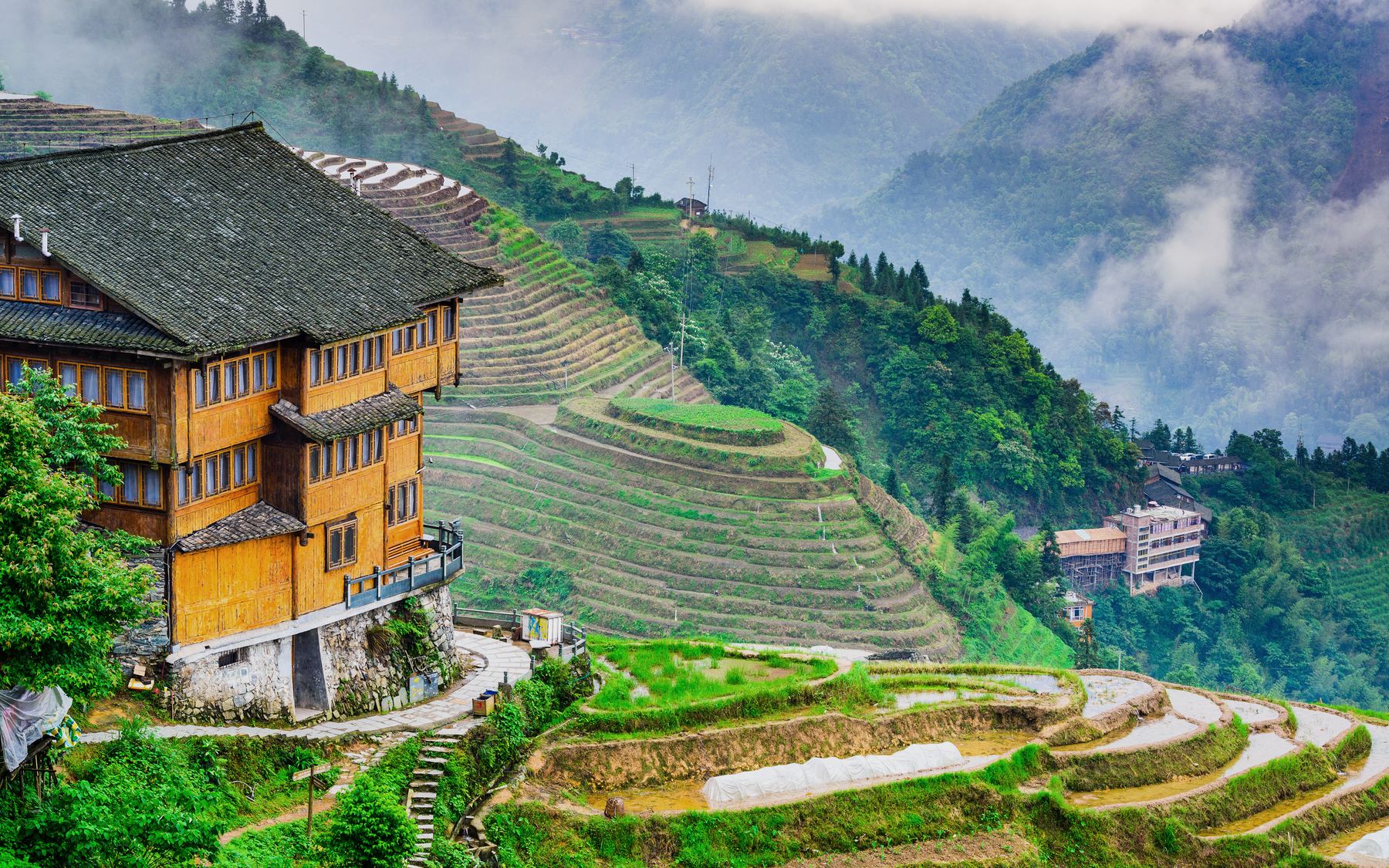
That leaves the emptied mountain villages, abandoned a generation ago when their young people went to the factories, the land a planning map marks no strategic value. A few people from the district go out there. In Chapter 5 a student tells Iris about one of them:
“He said life in the mountains is hard with no infrastructure, no medical care, and nothing running itself. He planted rice, and half of it died because he didn’t know what he was doing.”
What it leaves
Nobody in Iris’s district goes hungry. The water runs and the rice arrives, and nobody there is needed for anything. In Iris’s physics class, after a lesson on the photoelectric effect, a student asks her: “What do we do with it?”